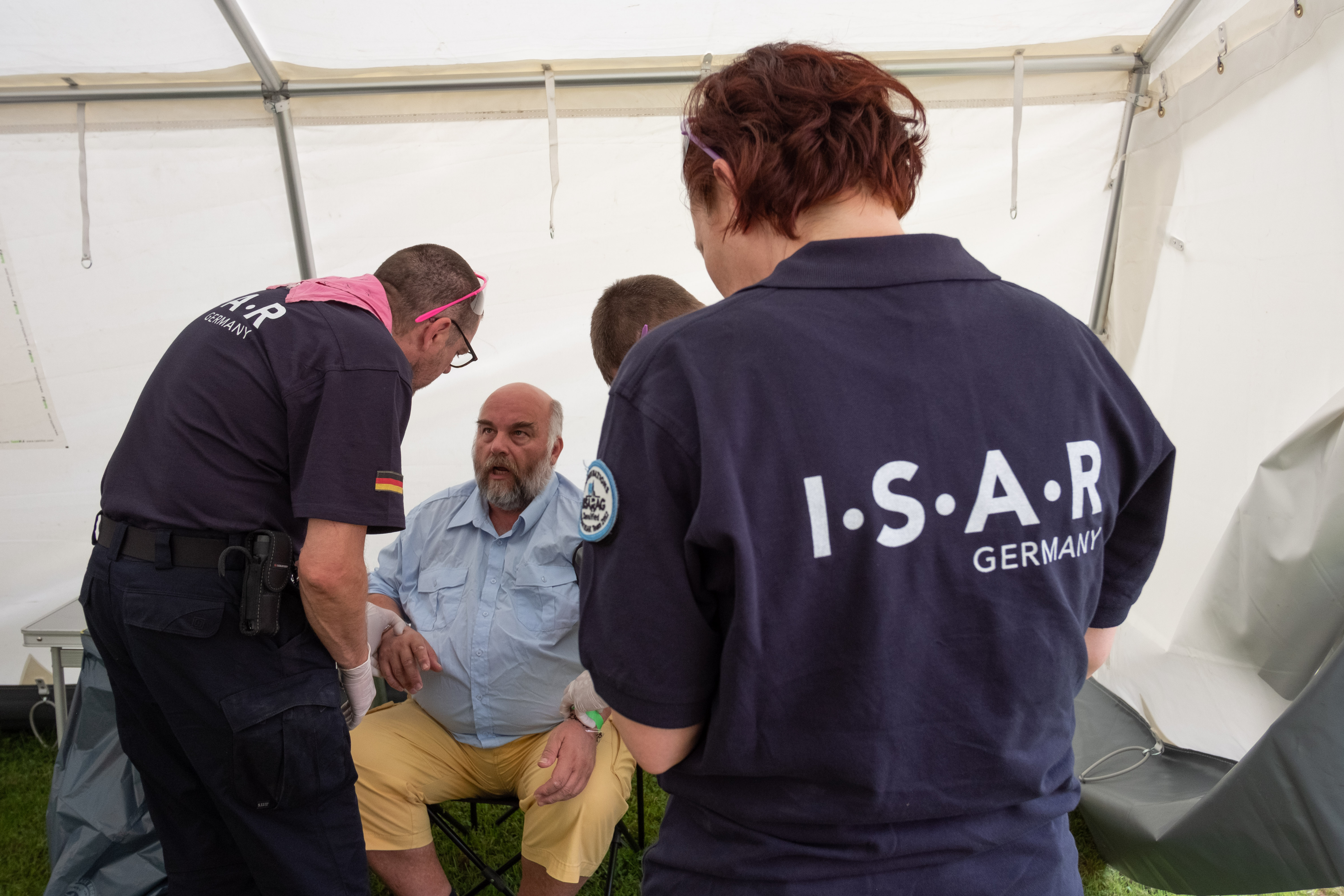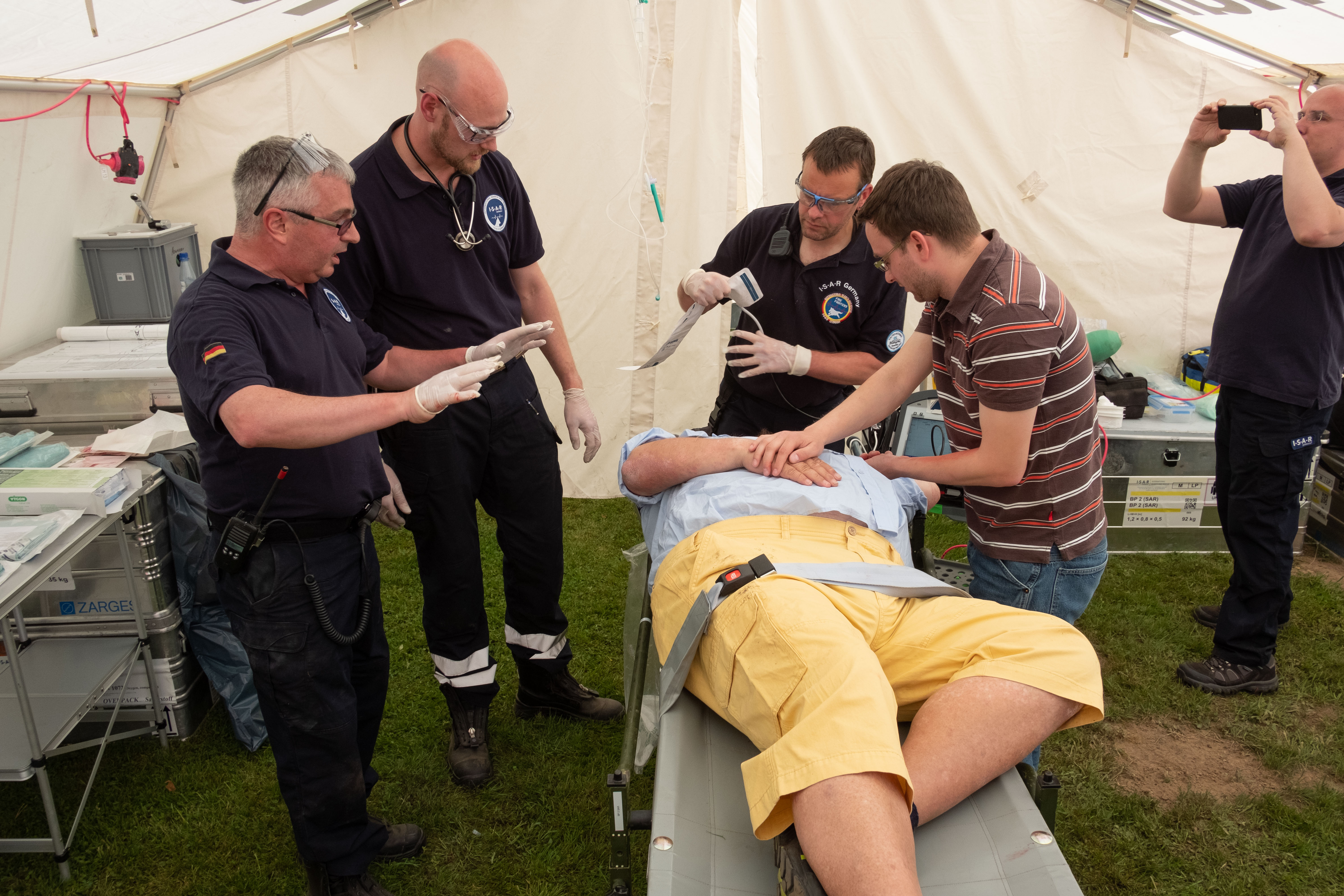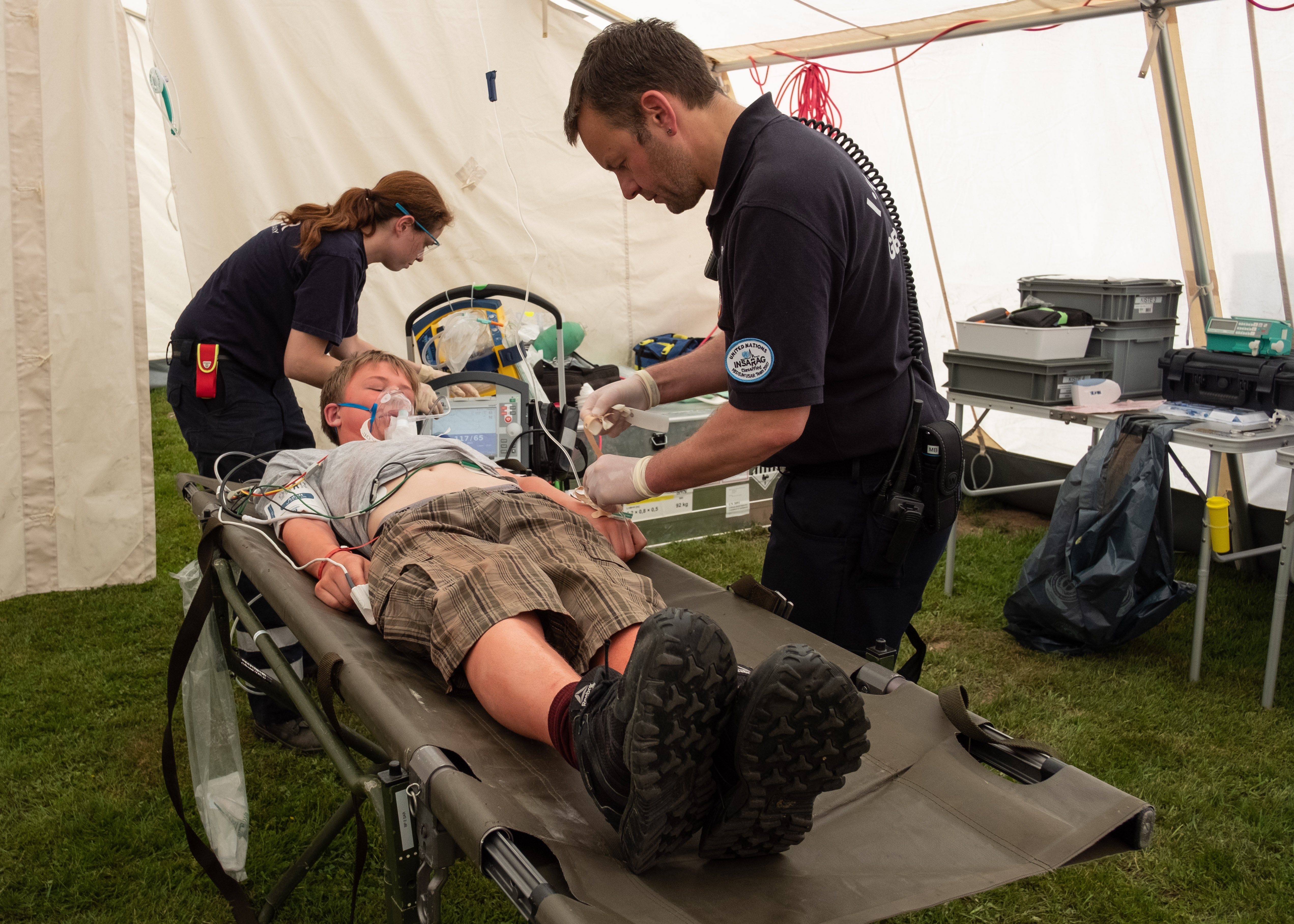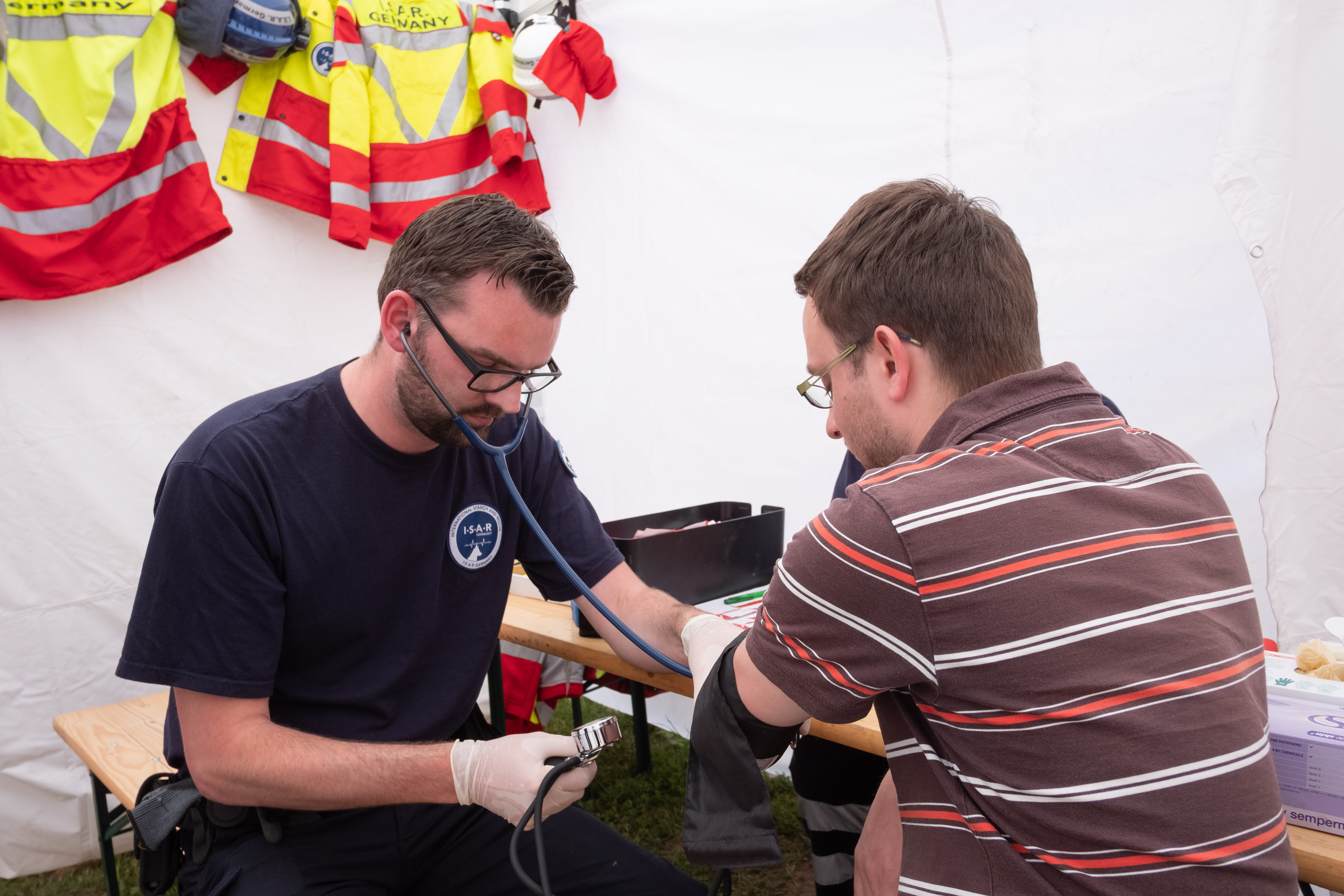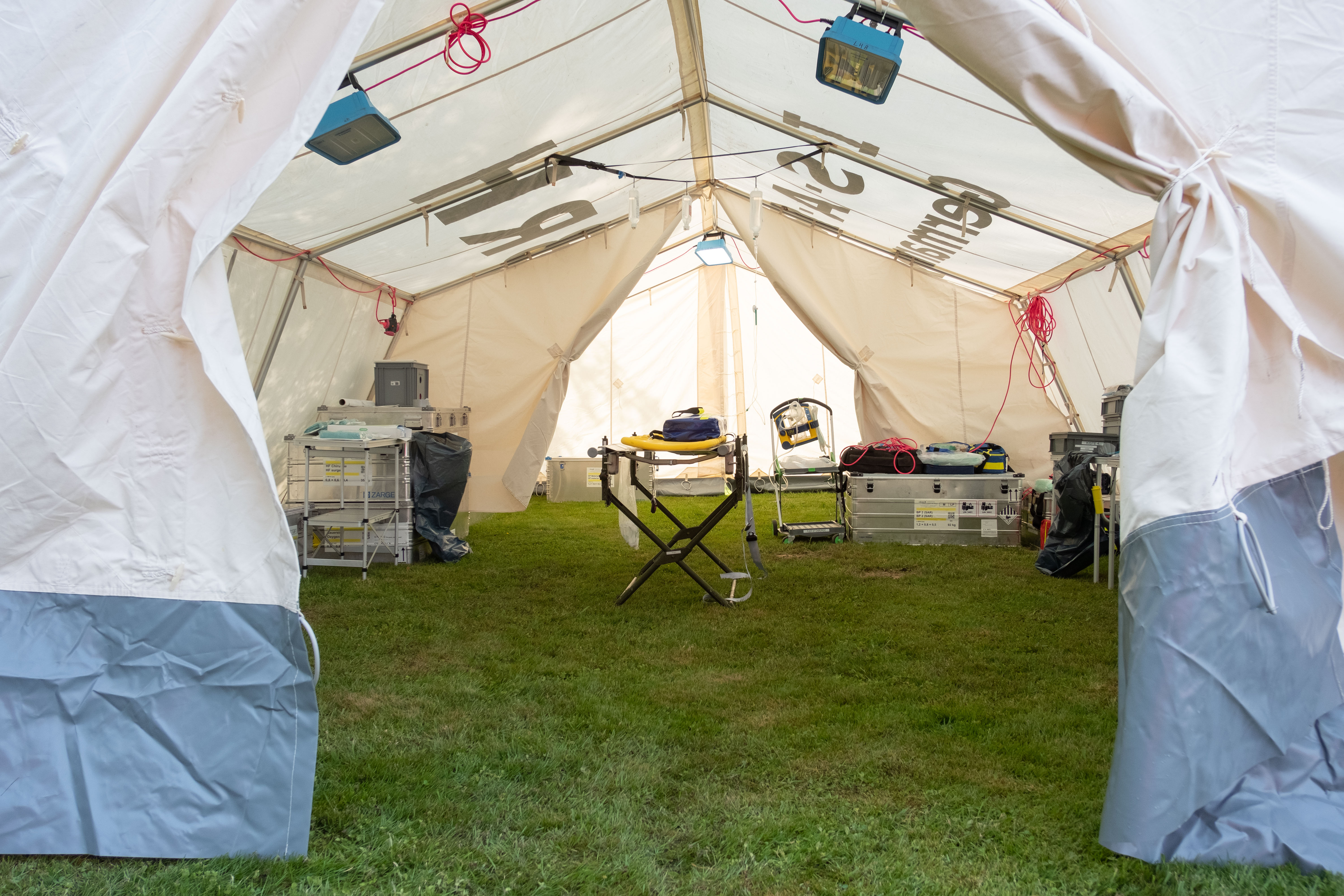


„Now we need a sample for the blood gas analysis. That's a bit tricky. Who will donate voluntarily?“ asks emergency paramedic Cornelia Wagner. Two volunteers immediately report to the black treatment tent of the Duisburg aid organisation I.S.A.R. Germany, which is also used for X-rays. In September 2018, the medical team from I.S.A.R. and the partner organisation BRH Bundesverband Rettungshunde will be assessed by the World Health Organisation (WHO) examiners. They have been training for this in Hünxe on the Lower Rhine since Thursday evening.
By certifying medical teams, the WHO wants to ensure uniform medical standards in the care of patients in crisis areas (e.g. after natural disasters). Frederic Ruckert, Medical Director of I.S.A.R. Germany, wants to have his so-called Emergency Medical Team (EMT) certified „for the treatment of patients in a field-based emergency room with several medical specialities“. „We need at least three doctors and nine nurses and emergency paramedics in each emergency team,“ he explains. Ideally, the more than 30 members of the I.S.A.R. and BRH EMT should include internists, surgeons, paediatricians, general practitioners, emergency paramedics, midwives and physiotherapists. „Because we have to be able to treat acutely life-threatening patients, which is what the shock room is set up for,“ says Ruckert.
In the „tent city“, which was set up for this interdisciplinary emergency department at the BRH training centre in Hünx in the same way as in remote disaster areas, the medics were also confronted with trained mimes over the weekend, who realistically portrayed patients with different injury patterns. These had to be diagnosed and treated over several hours in large numbers, sometimes arriving simultaneously, using the emergency equipment available in the tents. Patient management, radiation protection, X-ray application, waste management and hygiene optimisation were also part of the three-day training programme. After the exercise, the rescuers made an initial assessment. „It has become clear that the team works in a very professional and structured manner,“ says Frederic Ruckert. However, the organisational processes could be further optimised. This will be worked on intensively over the coming weeks and months. The next exercise is already on the programme for June.