

Refugee disaster in Libya
In March 2011, I.S.A.R. Germany handed over around one tonne of medical supplies to the Tunisian Civil Defence for the refugees from Libya. This was used to treat the refugees in coordination with the World Health Organisation. "The Tunisian aid workers have medical care fully under control," said I.S.A.R. head of operations Thomas Laackmann at the time. In this respect, the German aid supplies were in very good hands there. The so-called "Emergency Kit" was provided by I.S.A.R. partner "action medeor". In addition to antibiotics and bandages, the kit also contains special fluids and salts to treat dehydrated people. Disinfectants and sterilisation tablets for dirty water were also brought to Tunisia.
Refugees interviewed on behalf of the UN
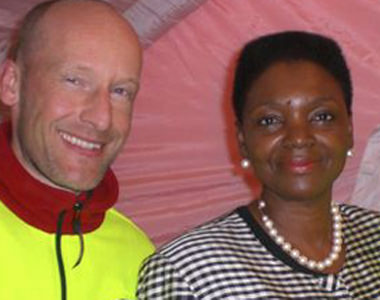
I.S.A.R. was also the only organisation to support the work of the OSOCC, the United Nations coordination centre in the refugee camp. The I.S.A.R. experts were involved in assessing the medical situation of the refugees. They were also tasked with interviewing refugees about their experiences. In particular, they were asked about their origins and their experiences on the way to the refugee camp. This was intended to enable a more precise assessment of the situation on the Libyan side. During its mission, the I.S.A.R. team also spoke with UN Emergency Relief Coordinator Valerie Amos. During the meeting, Amos was informed about the work of the aid organisation I.S.A.R. Germany, its tasks in disaster relief and its cooperation with the representatives of the United Nations in the refugee camp. Amos expressly thanked I.S.A.R. Germany for its commitment.