

Earthquake in Peru 2007
Following the severe earthquake in Peru on 15 August 2007, I.S.A.R. Germany immediately put together an aid team. This was based on an international request for help from the Peruvian embassy.
Help for Peru from I.S.A.R. Germany
The I.S.A.R. Germany information and situation centre attempted to organise air transport for the relief team and around six tonnes of material. However, it quickly became clear that our large team would not be on site in time. It was therefore decided to send a reconnaissance team - consisting of a team leader, a deputy team leader, a rescue specialist and an emergency doctor - with some of the medical equipment to Peru.
Cities destroyed by up to 90 per cent
After landing in Peru, the I.S.A.R. team was transported to Pisco, which was particularly affected by the earthquake. There, the crew set up its base camp at the military airport and held talks with the country's health minister and the local emergency management team. The district capital of Pisco was around 90 per cent destroyed at the time, and suburbs had also been flooded by a tidal wave.
The local hospital consisted only of the outpatient rooms, as the wards, operating theatre and functional rooms had been destroyed by the earthquake. Medical care was provided by local medical staff with limited resources.
The antibiotics, anaesthetics and dressing materials - which I.S.A.R. Germany had brought from its partner organisation "action medeor" in Tönisvorst - were immediately listed and distributed by the hospital pharmacist, as there was a considerable shortage of this material.
Help in demand from Germany
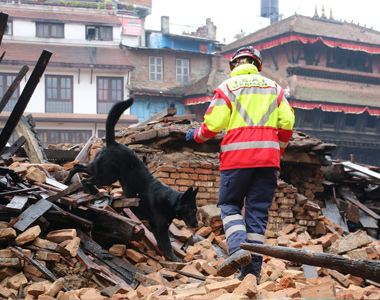
The rescue and clean-up operations in the disaster area were managed centrally by "Bomberos", i.e. the volunteer and professional fire brigades of Peru, and carried out with international help (rescue teams, search teams with rescue dogs and technical tracking, the RK from Peru and the surrounding countries). The help was very effective. The rescue specialist from I.S.A.R. Germany provided support in assessing the situation. His advice was particularly sought after by the "bomberos" when it came to assessing destroyed buildings.