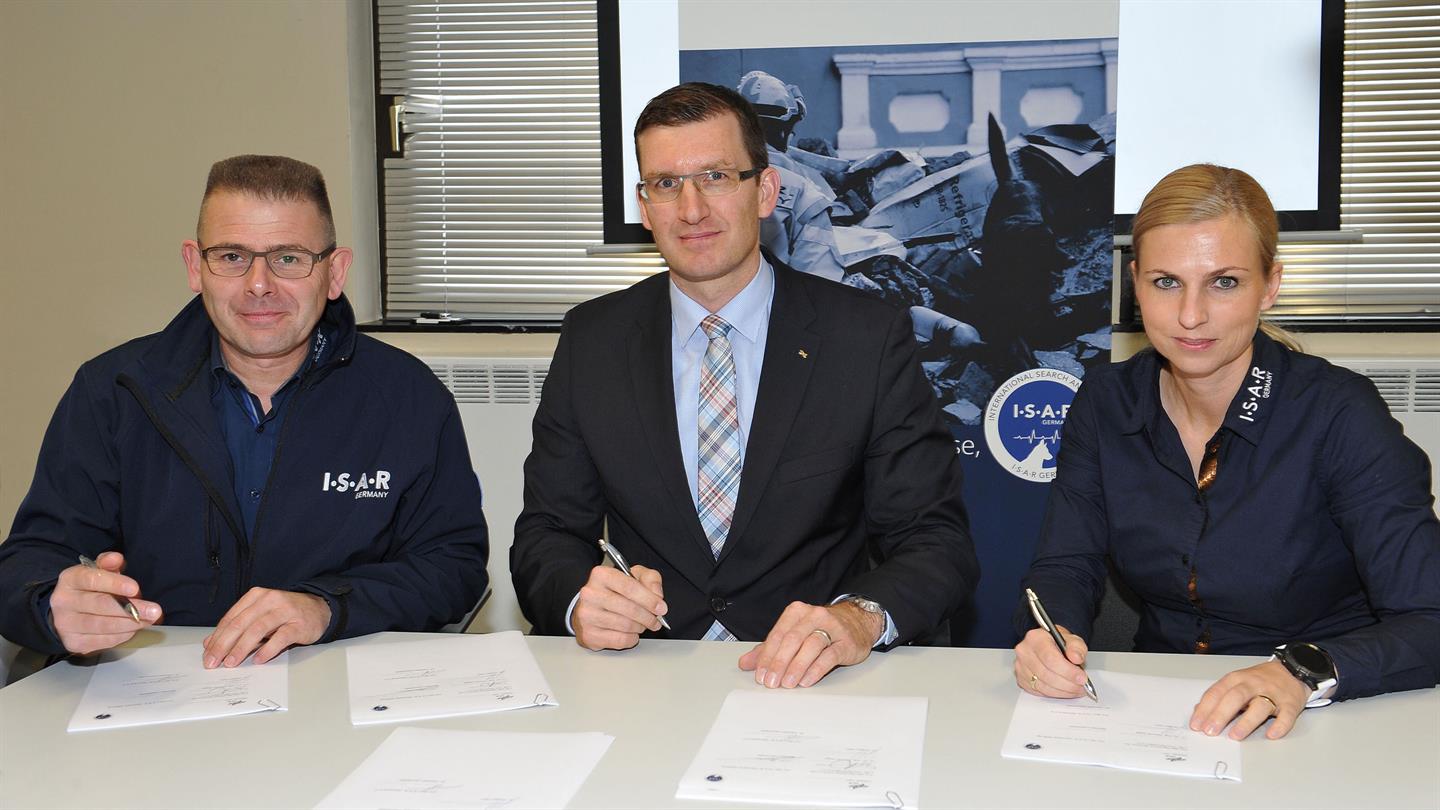


Fast and efficient assistance is essential after natural disasters or in the event of a crisis. In future, the German Aerospace Center (DLR) will work together with the aid organisation International Search and Rescue Germany (I.S.A.R.) on new developments and applications in the field of crisis and disaster management. Both parties signed a cooperation agreement in Weeze on 18 November 2016.
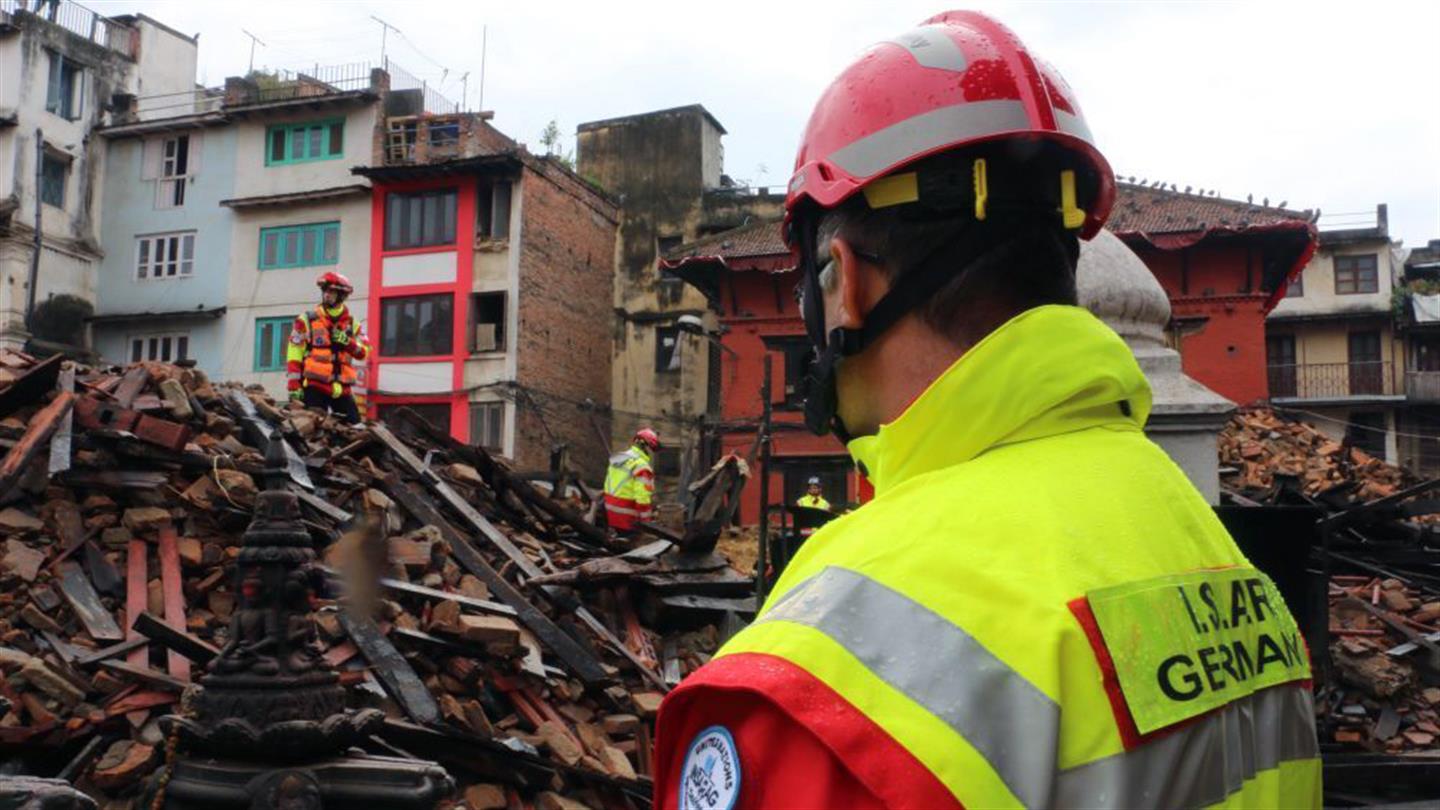
I.S.A.R. Germany is a non-profit aid organisation. Founded in 2003, the organisation assembles a team of rescue specialists in the event of disasters and catastrophes, which is dispatched to the respective area of operation as quickly as possible. In the event of earthquakes, flood disasters or explosions, the rescue team searches for trapped people and provides medical assistance. Modern technology can support the helpers in their work. „We are delighted that the cooperation with I.S.A.R. Germany means that DLR technologies can be used immediately where they are needed,“ explains Dr Dennis Göge, DLR's Programme Coordinator for Security Research. „The increased collaboration also has the advantage that future technologies in the field of crisis and disaster management can be jointly developed for real-life use.“
Support from the air and directly on site
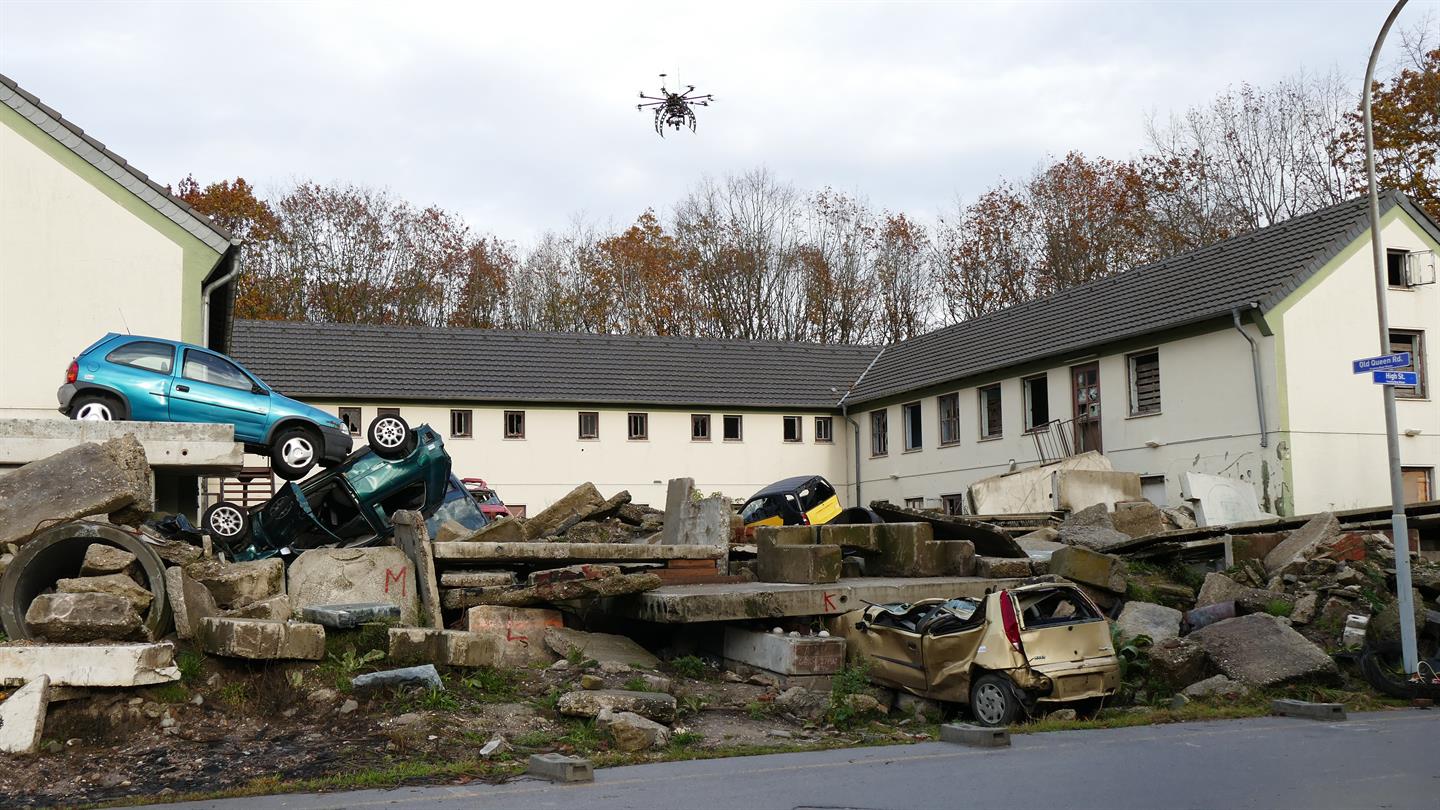
To this end, specialised camera systems are being developed at the DLR's Institute of Optical Sensor Systems, for example, which enable the search for buried victims, among other things. These systems are so compact that they can also be operated on small unmanned aerial vehicles (UAVs) - a valuable addition to the I.S.A.R. team's localisation and rescue technology. „With the real-time functionality of our MACS camera systems, it is possible to map an operational area from the air within a few minutes in the event of major incidents - without complicated infrastructure, during the day and in future also at night. We hope to be able to make an important contribution to the coordination of the emergency services on site,“ explains project manager Ralf Berger. Further developments and tests will be carried out in close coordination with the I.S.A.R. operational commanders. This will enable the DLR scientists to realise the special requirements of rescue operations in the development of future camera systems.
DLR technology is already helping to save people
The aid organisation has been using DLR's satellite image data for several years now. „We are very grateful for the excellent cooperation with DLR during our missions. They have significantly supported our reconnaissance measures,“ says Daniela Lesmeister, Chairwoman of I.S.A.R. Germany. „With the map material provided, we were able to directly identify heavily affected areas and efficiently coordinate our teams on site.“
Most recently, the Center for Satellite Based Crisis Information (ZKI) at DLR's Earth Observation Center (EOC) supported the aid organisation in its mission following the severe hurricane Matthew in the Caribbean at the beginning of October 2016. It helped the rescue workers to gain an overview of the affected area, assess the extent of the damage and organise the aid mission. „This collaboration and the experience gained from the missions in the disaster area provide us with important ideas on how we can align and improve our research and development work even more specifically to the requirements of disaster management and to support humanitarian aid missions,“ explains Prof Günter Strunz, Head of Department at EOC.
Security research
The German Aerospace Center's security research plans and manages defence and security-related research and development activities in coordination with partners in government, science, industry and international organisations. The cross-sectional area of security research combines the core competencies from the established DLR programmes in aeronautics, space, energy and transport. In total, more than twenty DLR institutes and facilities contribute to the development, testing and evaluation of technologies, systems and concepts as well as to the ability to analyse and assess security-relevant applications as part of their security-related work.