

As part of the major Achilles exercise in the south-western tip of Switzerland, which has been running since Sunday, the aid organisation I.S.A.R. Germany had to master a particularly tricky night mission from Monday to Tuesday. Under the ever-watchful gaze of an international group of inspectors, the aim here was once again to be classified by the UN as suitable for global rescue operations following the most severe natural disasters for the next five years.
The training task of rescuing survivors from the rubble of the massively damaged "Casino" hotel after a fictitious earthquake proved to be highly complex. The I.S.A.R. experts estimated the expected duration of the operation to be at least twelve hours.
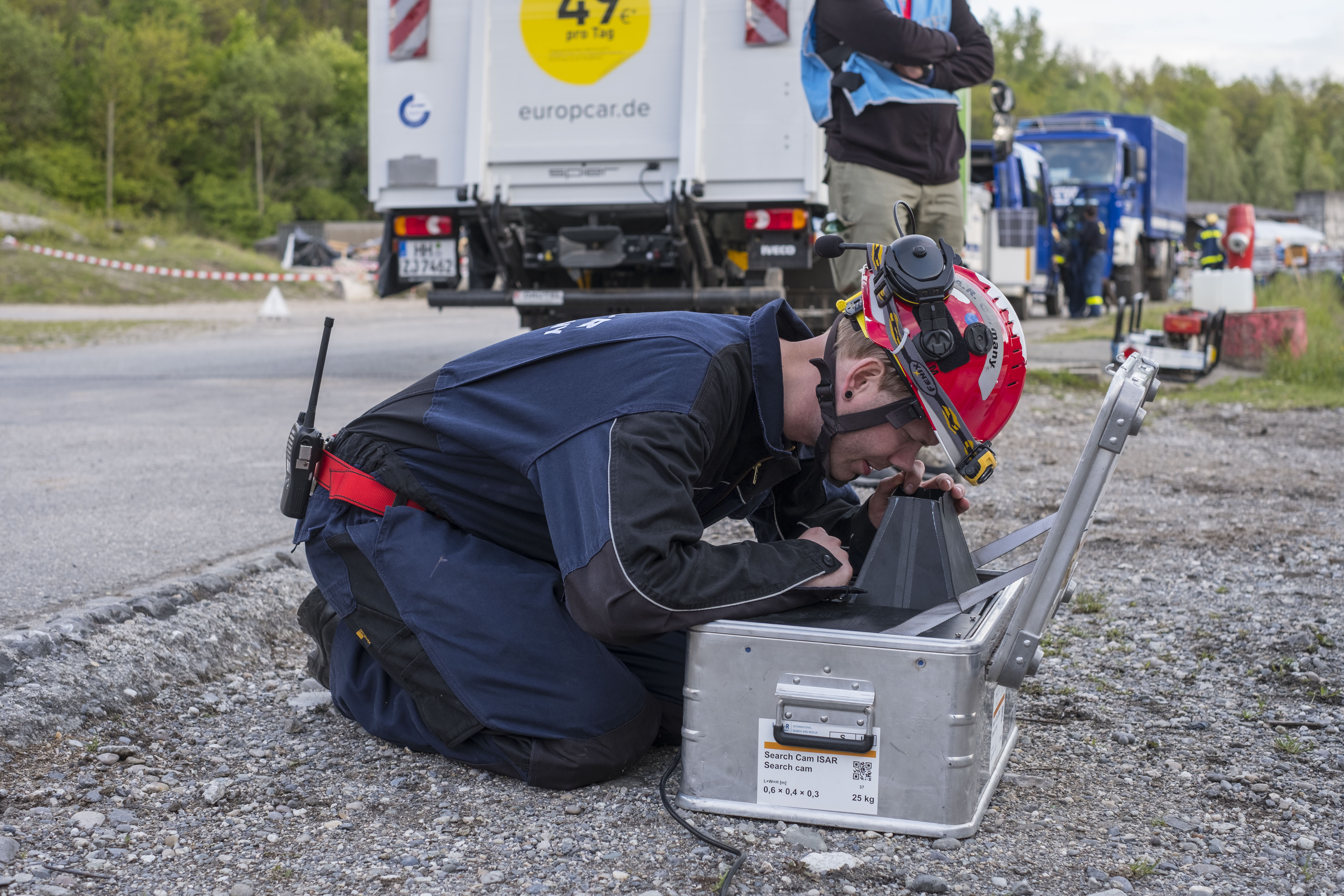
On Monday morning, during an initial investigation of this sector of the destroyed village of Épeisses, search dogs had already picked up the scent of trapped people. The rescue team, which had arrived with heavy equipment, therefore focussed on this building. The use of a remote-controlled camera, shouts and knocks confirmed that at least two survivors were hoping to be rescued from under the tangle of stones and twisted metal.
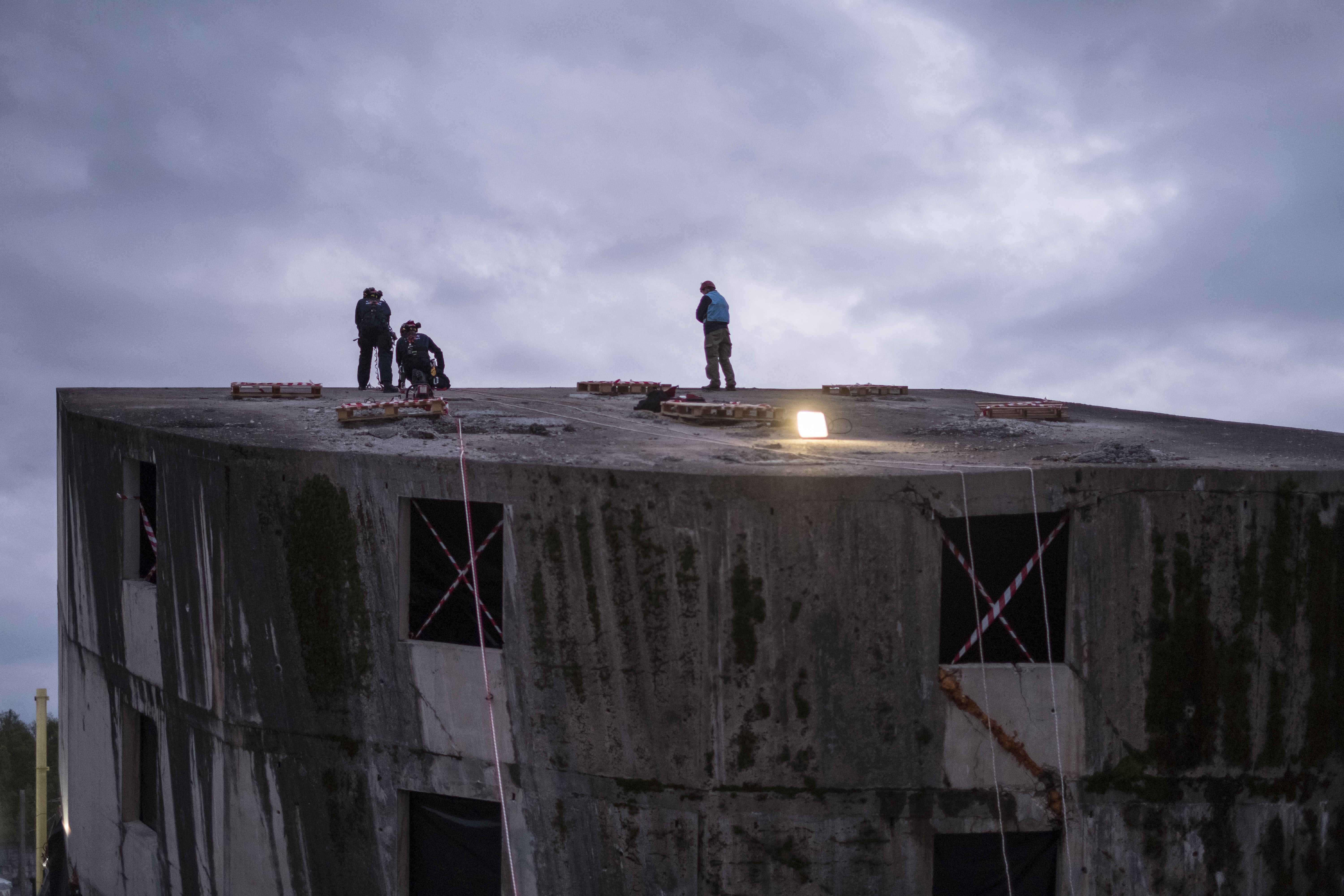
The I.S.A.R. expert responsible for safety on site, Torgen Mörschel from Wenden in the Sauerland region, described the special nature of the task: "We can only reach the victims through the solid concrete roof. The multi-storey building has sunk and could slide down further at any time."
With the help of a throw bag, the salvagers reached the steeply sloping roof, illuminated the scene with floodlights and set about drilling an opening through the concrete ceiling in order to abseil down into the interior. "The hotel owner told us that 18 of the 25 rooms were occupied and that up to 17 people were missing," said Mörschel, describing the initial situation provided by the exercise organisers. "As the kitchen was fuelled by gas, we also had to constantly take measurements at the scene."
In the eerily lit ruins of the "Casino" hotel, the I.S.A.R. team (rescuers, dog handlers and medical rescue teams) therefore had to pursue two exercise priorities with equal priority throughout the night: Firstly, to make rapid progress in order to find as many buried victims as possible, and secondly, to ensure their own safety at all times.
Text: Clemens Wortmann
Photos: Stefan Sobotta/ Paul-Philipp Braun
-

The ISAR members used climbing techniques to reach the roof of the "Casino" hotel, from where they cut a hole in the concrete wall.
-

Using a remote-controlled camera, the ISAR team gained an insight into the destroyed building.
-

Emergency services use a concrete chain saw to open up access to the spill.