

It is not only I.S.A.R. Germany's capacity to rescue people and provide medical care in global disaster relief operations that is currently being tested in the Switzerland during a major exercise tested. The examiners commissioned by the UN are also interested in the ability to set up a self-sufficient base of operations at the deployment site that does not place an additional burden on the scarce resources of the locals. Within just a few hours, the experienced I.S.A.R. team once again managed to set up a camp for exactly 50 emergency personnel and their rescue dogs, including sanitary facilities, electricity, water treatment and a large field kitchen.
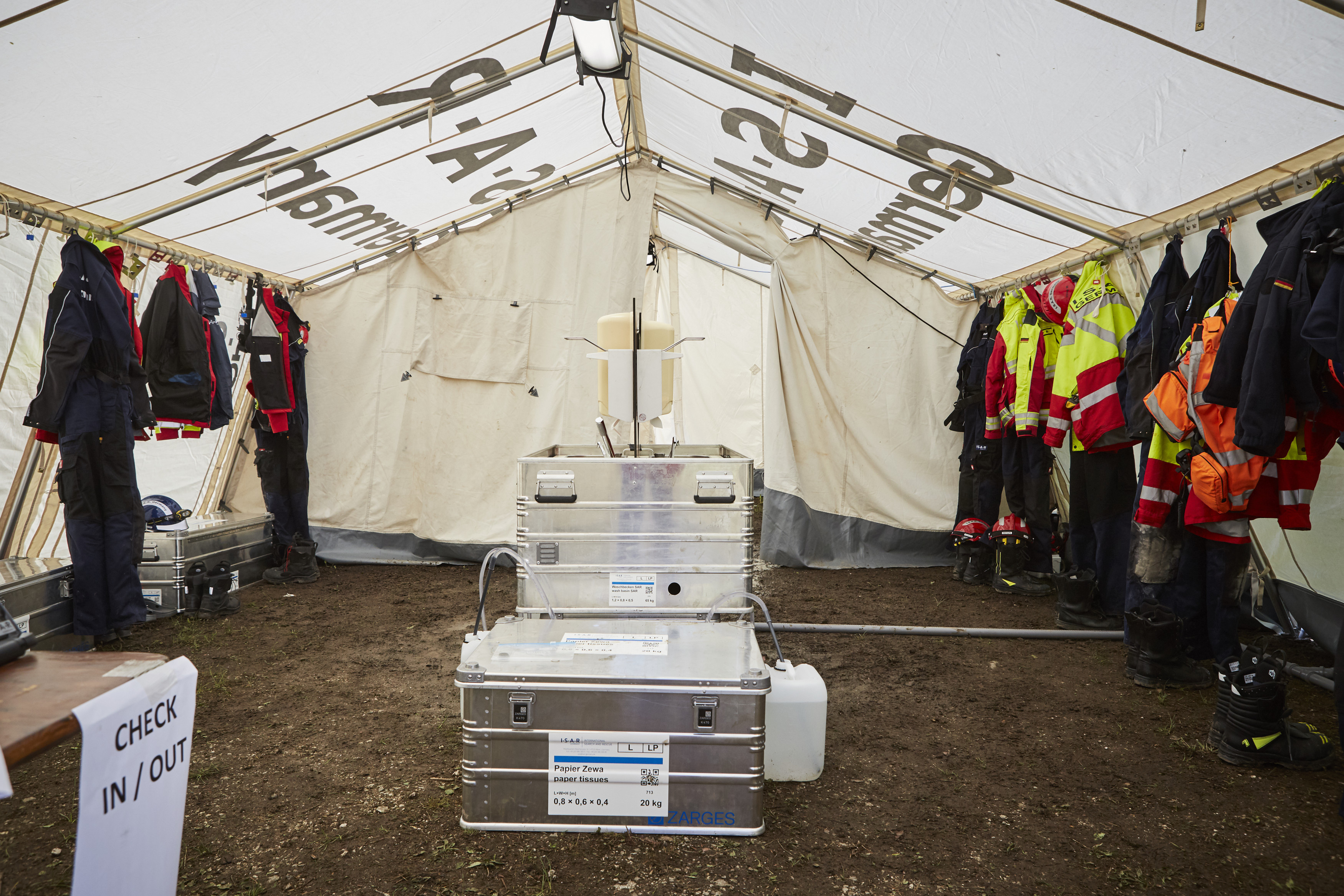
The Base of Operation, or BoO for short, is always entered through the black and white area. In the front section, those returning from deployment hang up their dirty and often contaminated clothing and clean themselves and their boots, while their clean camp clothing hangs in the neighbouring white area. Only then do they enter the camp itself.
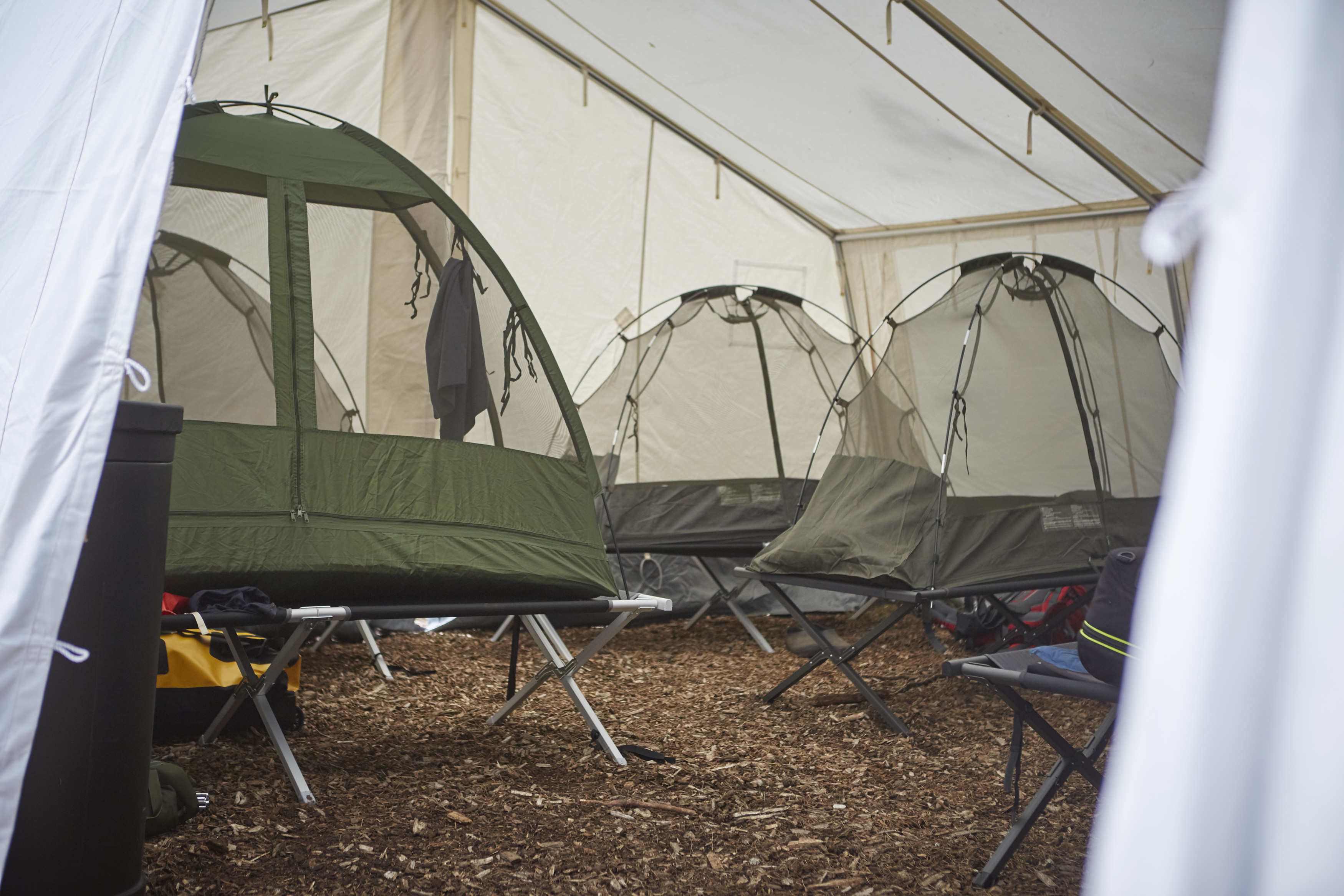
Half of the large tents erected at the training centre near Geneva contain camp beds surrounded by mosquito nets. The others house functional rooms. These include the water treatment system, installed and supervised by Benno Riehl. If the water used is not excessively contaminated, his system produces up to 100 litres of drinking water per hour, explains the Koblenz native. He constantly measures a variety of ingredients in test tubes and an incubator.His main focus is on „microbiology, because it multiplies rapidly, makes us ill and leads to diarrhoea“, says Benno Riehl.
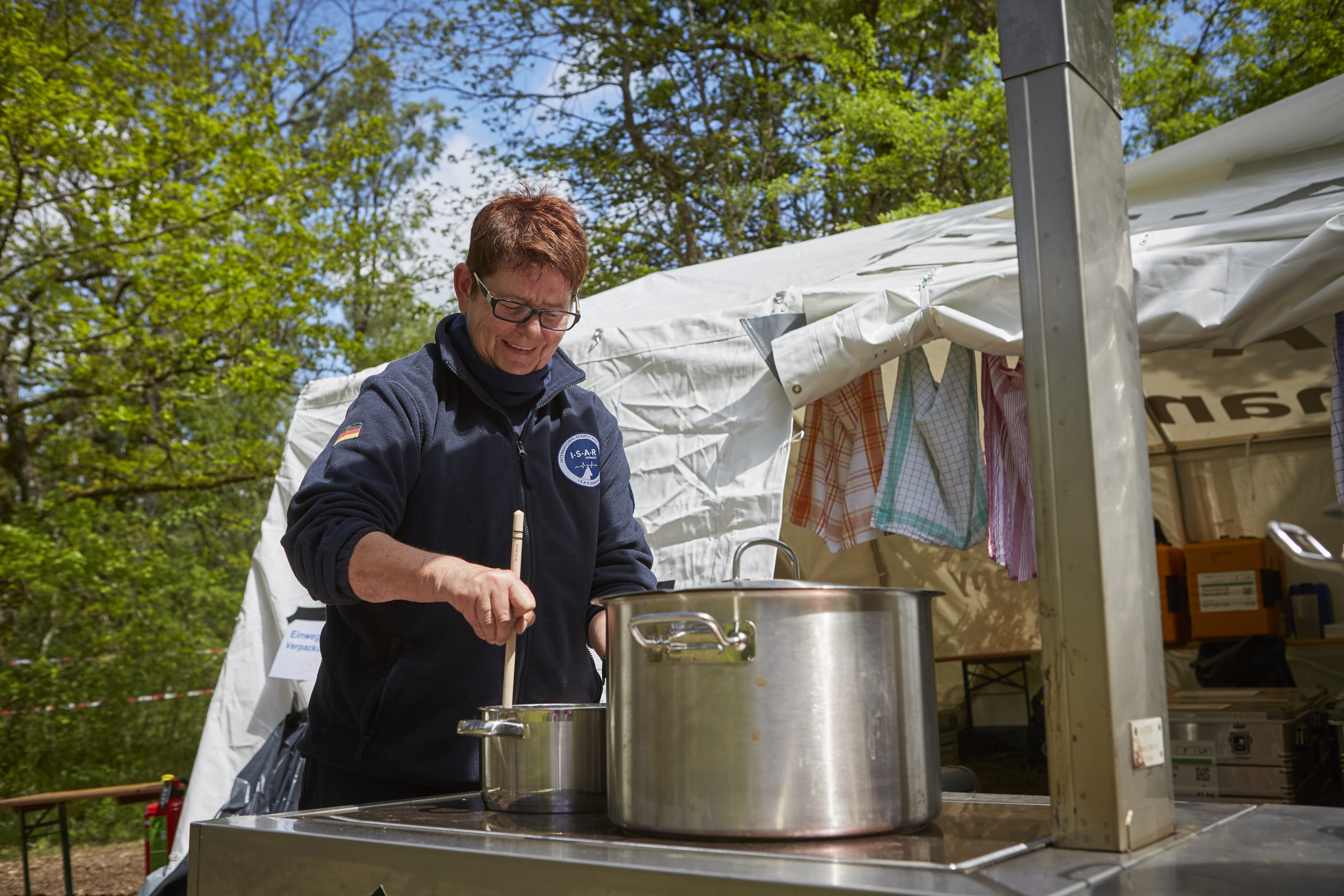
Camp caterer Martina Grinnus is a major customer of the „white water“ produced here. Behind a mobile cooker in the kitchen tent, numerous metal crates are stacked with ready-made food and pre-cooked meals. The labels simply state the time of day: early, midday or evening. The rule of thumb is that a mission team should be able to feed itself for ten days from the food it has brought with it in order to conserve supplies in the crisis area, which are in short supply after an earthquake or hurricane.
And then there are the boxes labelled „Sweet“. Martina Grinnus knows that the energy bars, liquorice and sugary snacks are very important in the field. „Out in the field, they can only eat a little and irregularly for hours, so sweets provide the necessary motivation,“ explains the Hamburg native. And so her answer to the question of what works best in her field kitchen comes as no surprise: „Nutella,“ she says bluntly. The helpers' stressed bodies simply get what they need.
Photos: Stefan Sobotta
-
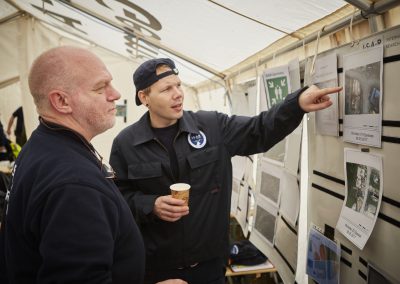
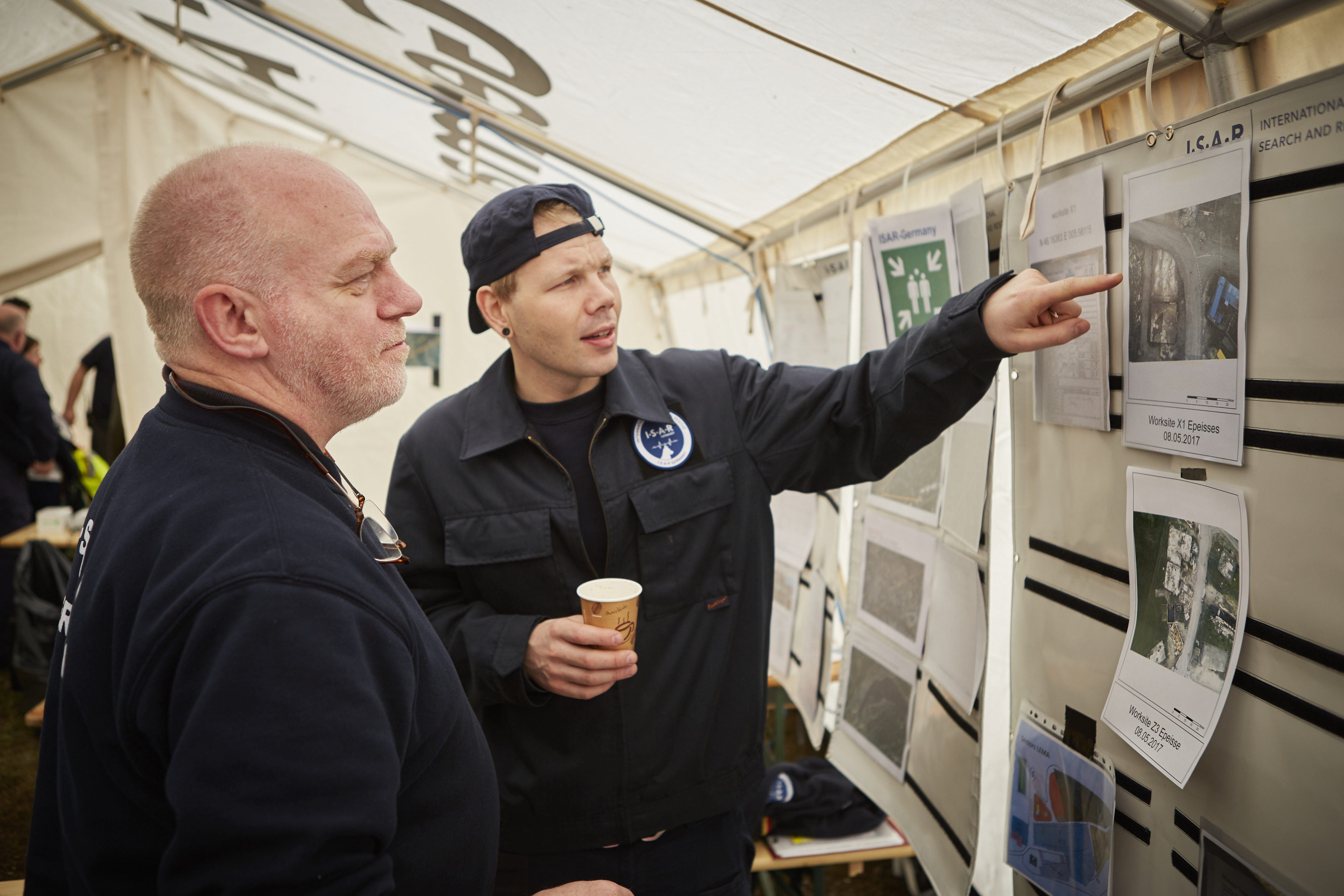
Management tent in the Base of Operation (BOO) camp.
-
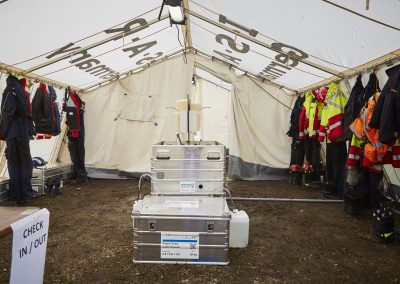
Black and white area in the Base of Operation (BOO) camp.
-
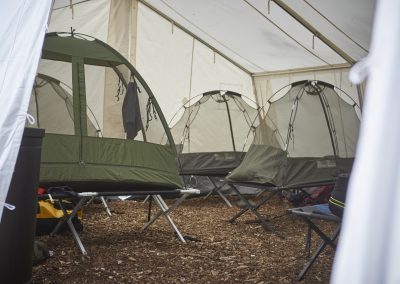
Sleeping tents with mosquito nets in the Base of Operation (BOO) camp.
-
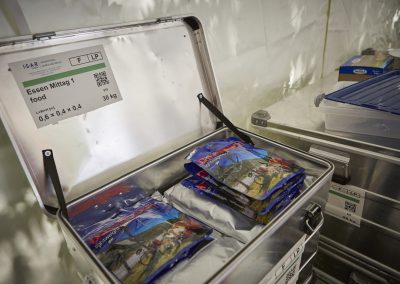
Freeze-dried ready-to-eat food in the Base of Operation (BOO) camp.
-

Martina Grinnus cooks at the Base of Operation (BOO) camp